Go-Solar · 2024 · Mobile · AI · Sustainability · Brand
Solar planning, finally in plain language.
A digital platform helping Nigerians and emerging-market users accurately calculate solar energy needs, avoid vendor overpricing, and understand their systems using AI and localised insights.
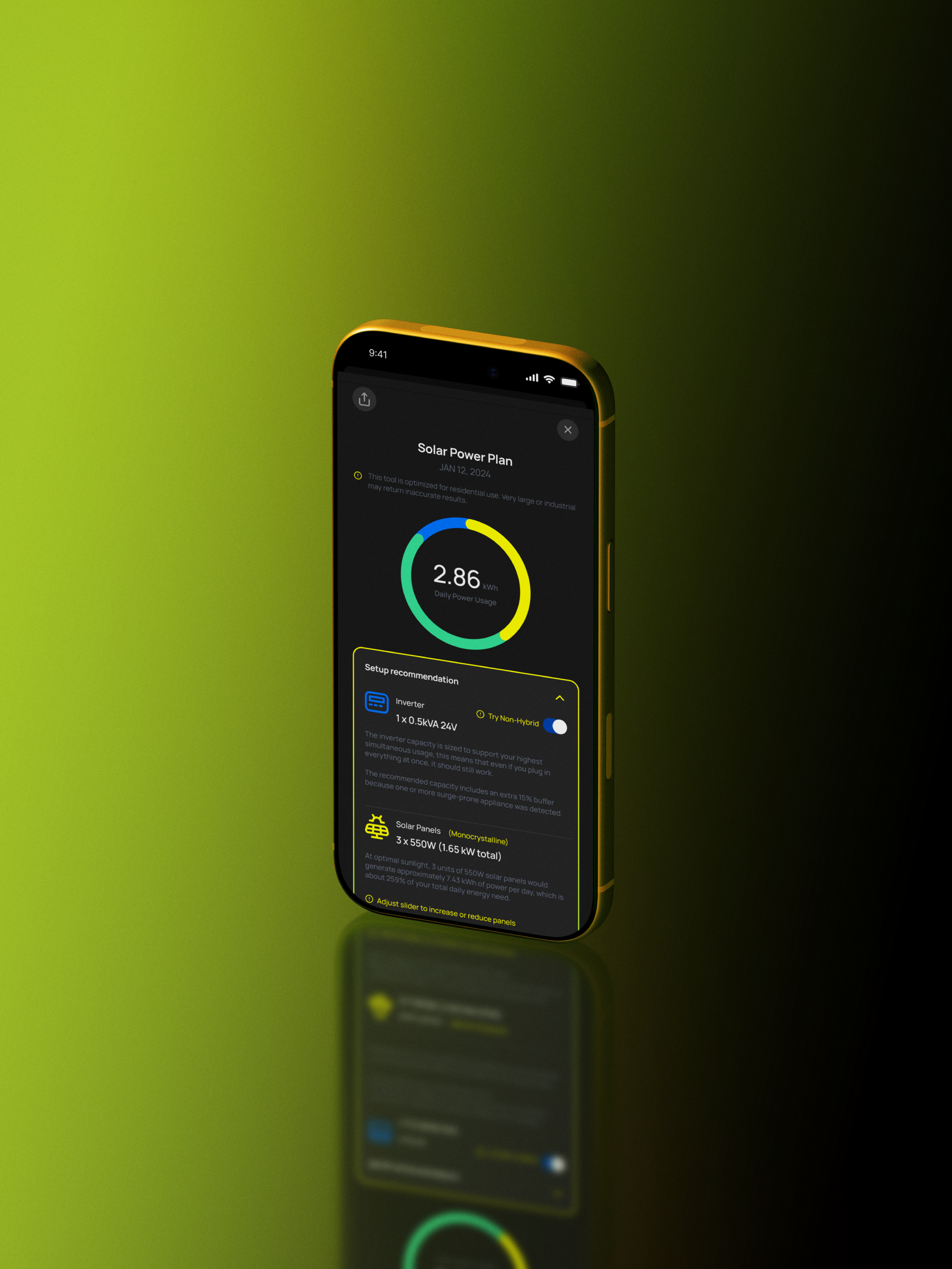
Go-Solar helps first-time solar buyers in Nigeria size systems correctly using transparent calculations, AI-assisted appliance recognition, and pricing logic localised for Lagos conditions.
The Problem
Users don't understand energy consumption, distrust vendors due to inflated sizing, face overly technical calculators, and encounter tools that ignore local realities.
The Goal
Build trust through transparent calculations, simplify solar planning with localised logic, and educate users about their energy needs using AI assistance.
Role
Lead Product Designer
0
Modes
Lagos
Localised for
Yes
AI-assisted
I interviewed Nigerian households and reviewed existing solar calculators to understand user fears, confusion points, and trust gaps when planning solar installations.
User Profile
Everyday Nigerians and emerging-market users — homeowners, renters, small business owners and professionals considering solar for the first time.
- 01Defined product vision and UX strategy for local needs
- 02Created complete brand identity system
- 03Designed end-to-end mobile experience & system logic
- 04Designed AI device recognition and chat support
- 05Designed landing page for value communication
01
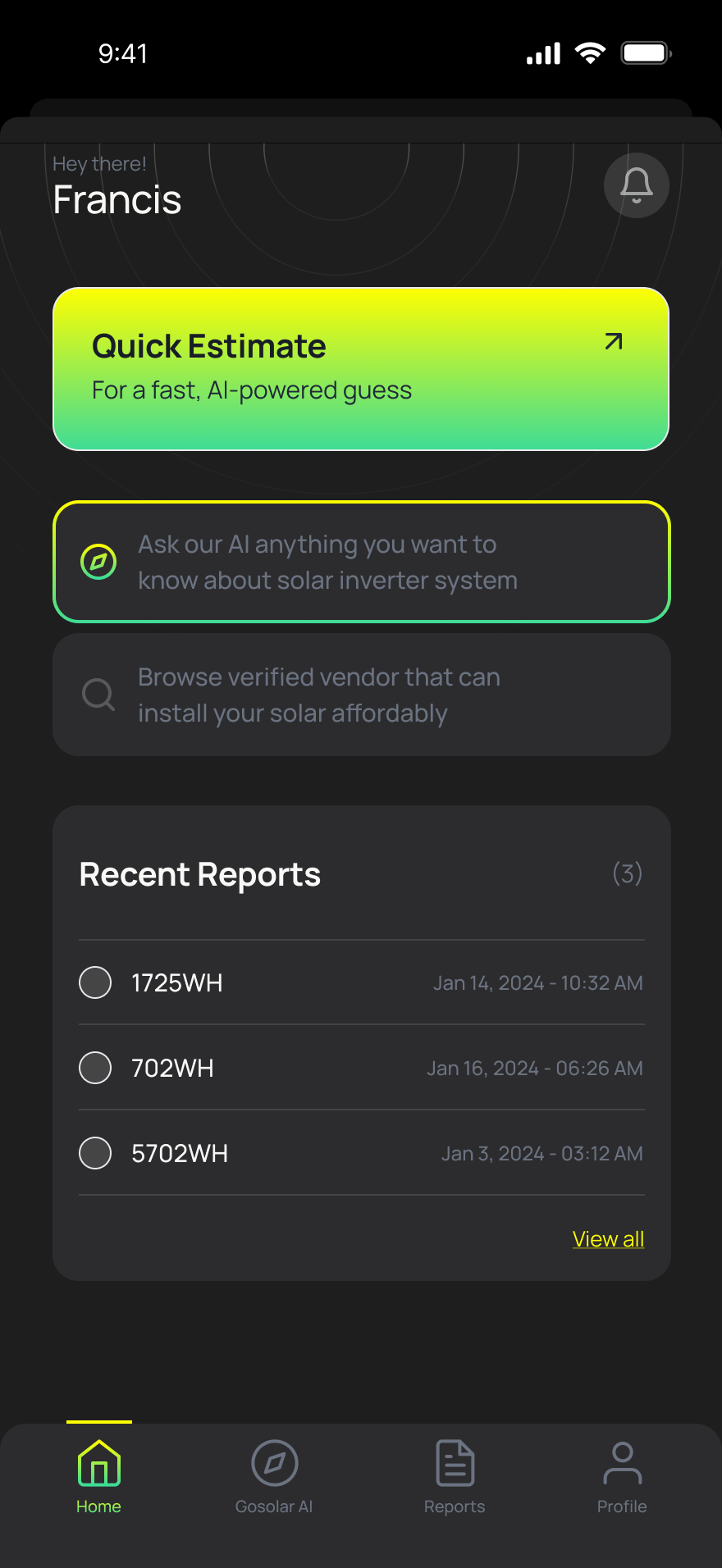
Welcoming home
A landing screen built around clarity, not jargon.
02
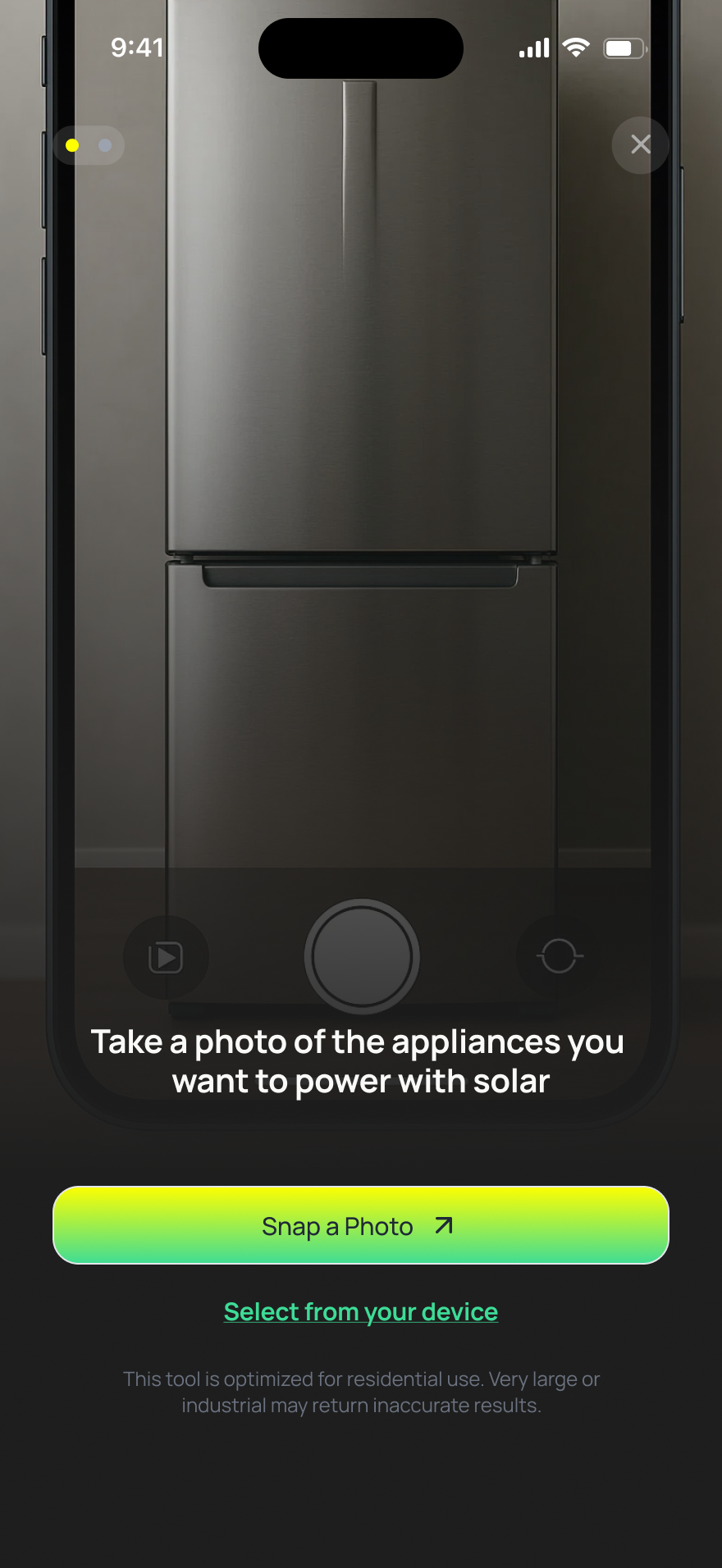
Snap a photo
AI device recognition turns the camera into an inventory tool.
03
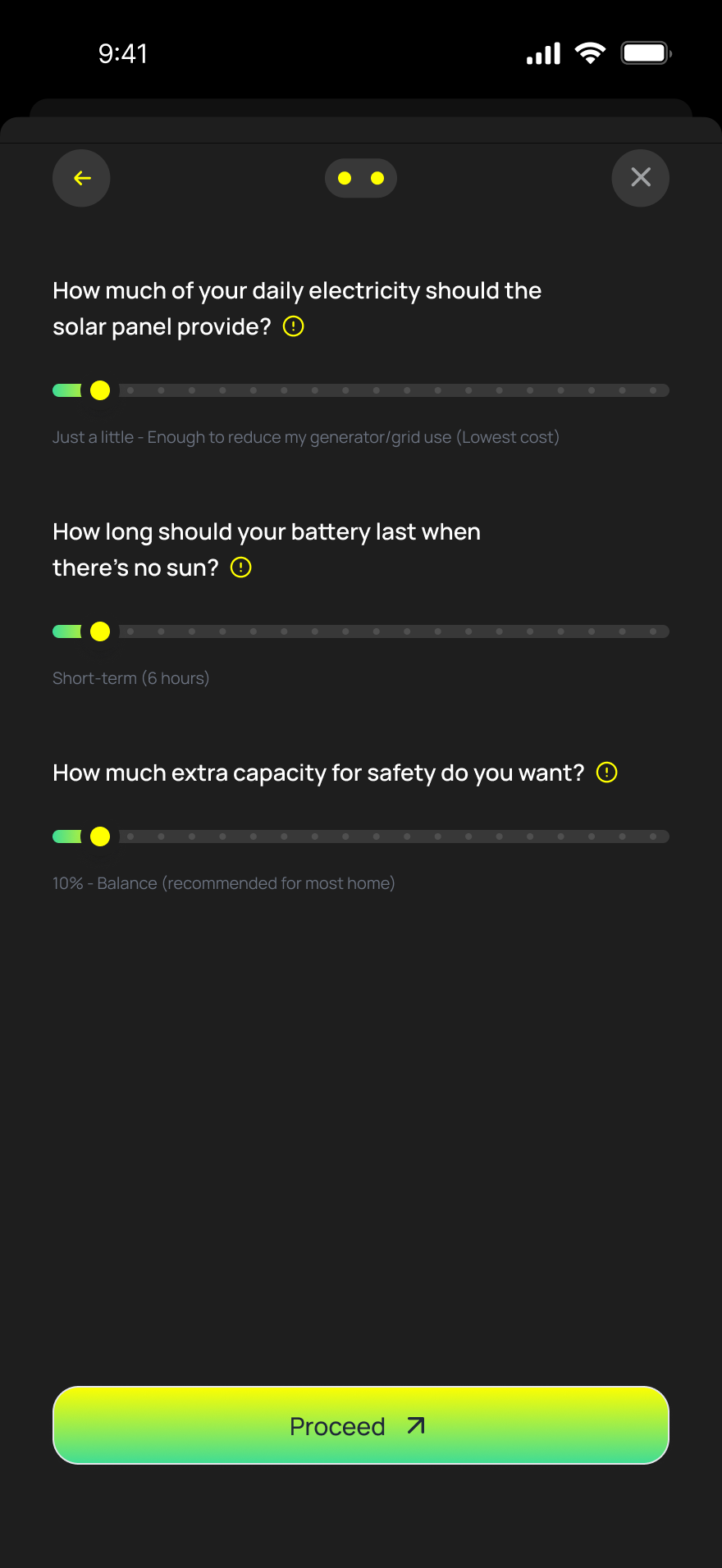
Guess or Precise mode
Two paths into sizing — for confident and curious users alike.
04
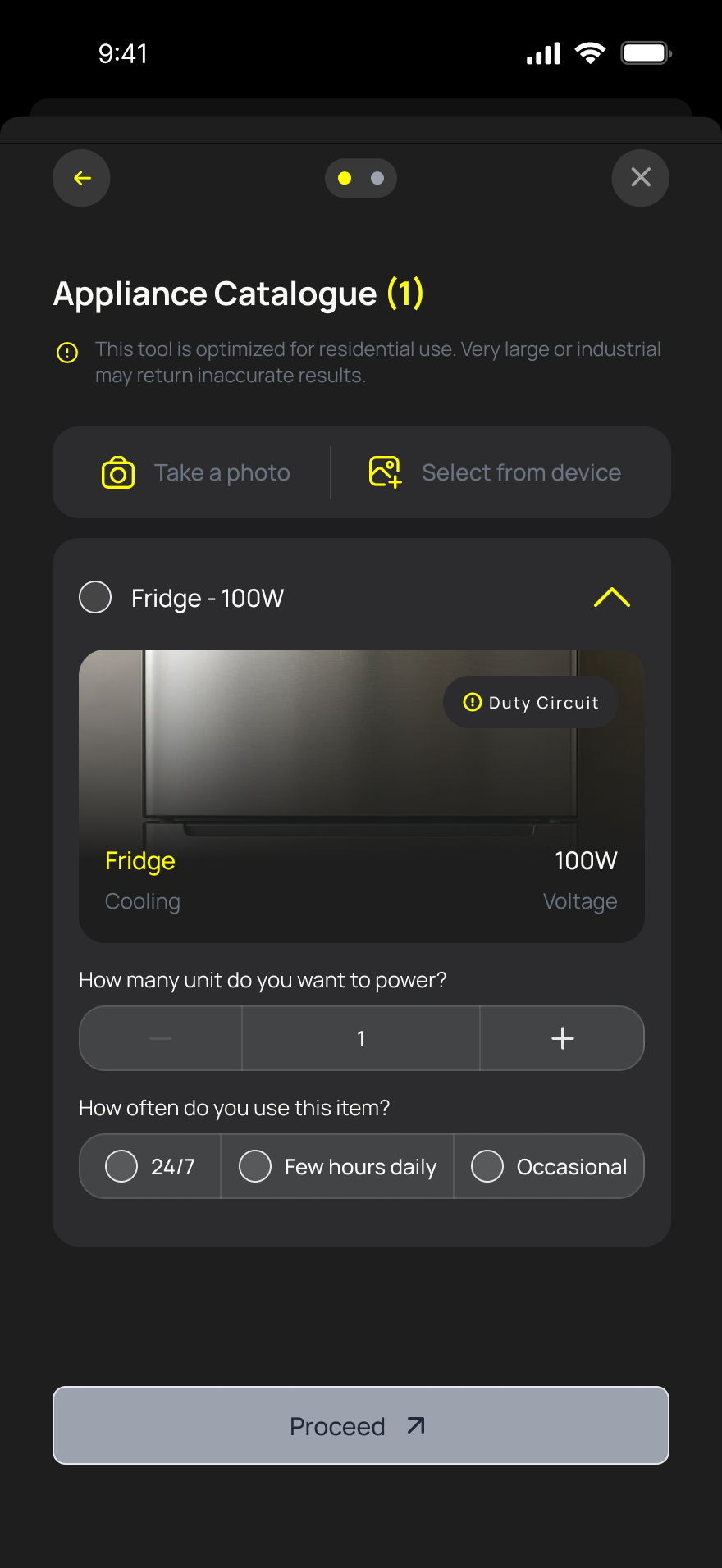
Appliances, made tangible
Editable lists with usage assumptions shown openly.
05
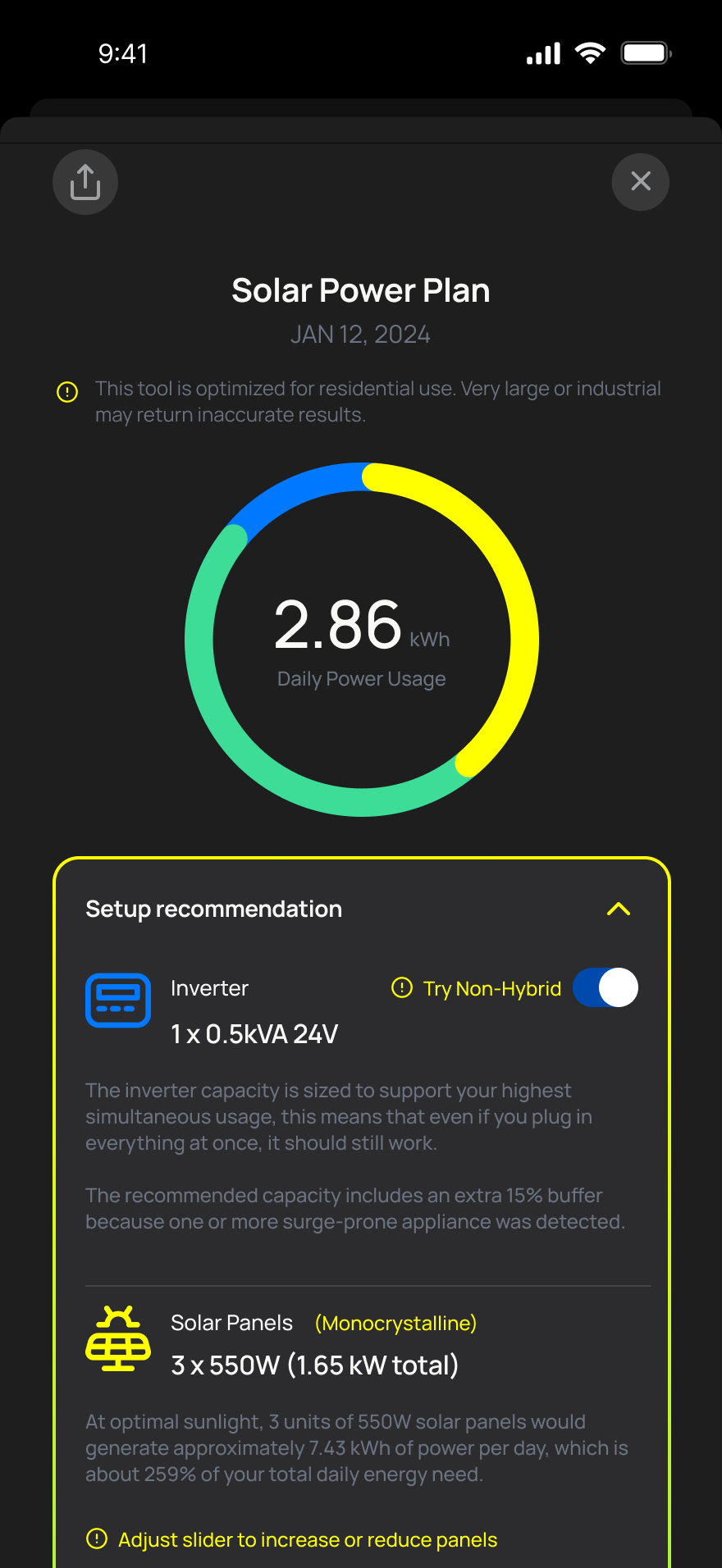
Transparent results
Panels, batteries, inverter, cost and CO₂ savings — explained.
06
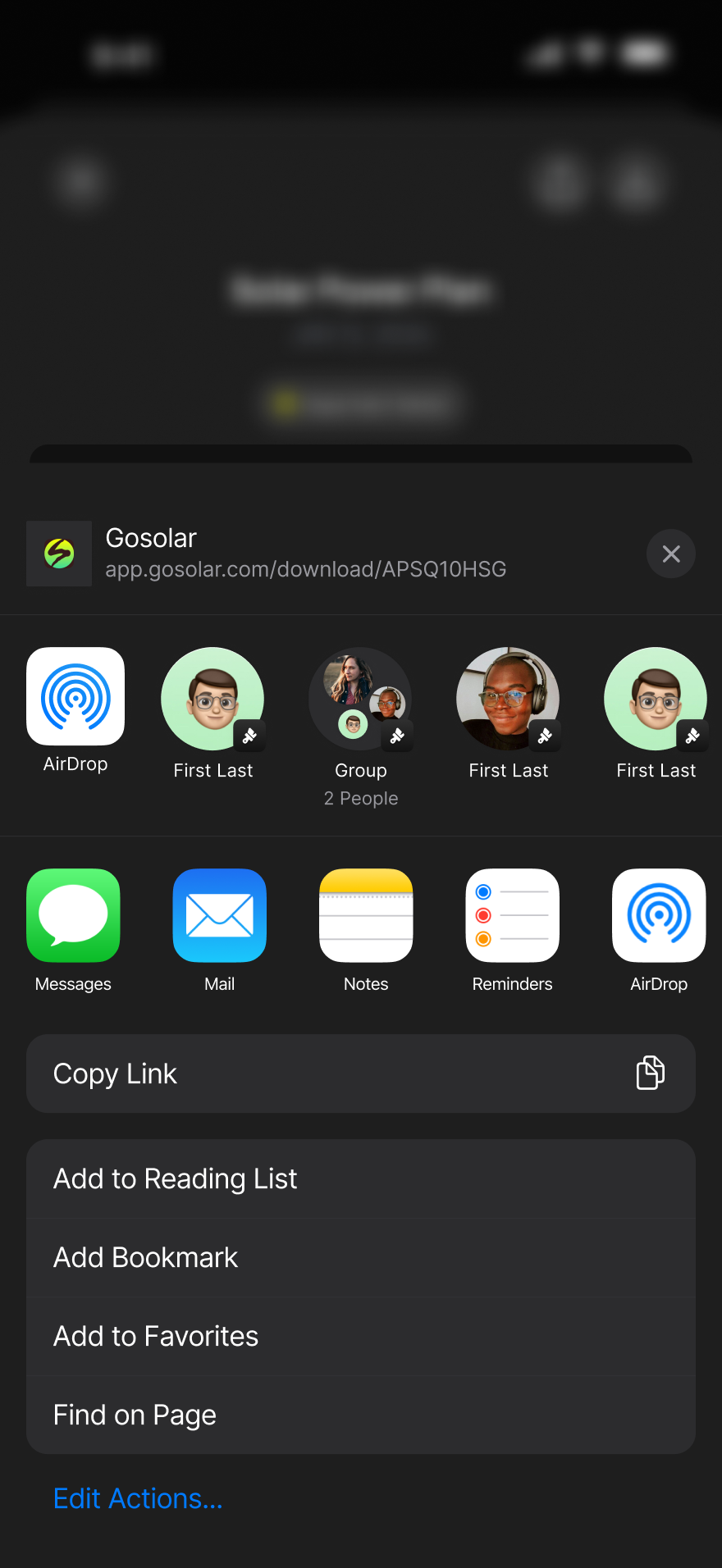
Share to verify
Users can take the result to any vendor and compare honestly.
The platform increased trust in solar planning, reduced vendor overpricing risk through transparent sizing, and educated users about how solar works and what to buy.
Takeaways
Trust is a UX problem before it's a tech problem. Transparency beats black-box recommendations. AI works best when users can question, override and learn from it.
Impact
- 01Increased user trust and confidence in solar planning
- 02Reduced risk of vendor overpricing
- 03Users learned solar fundamentals through transparent design
- 04Strong engagement with AI chat and Guess Mode among first-time buyers
What I learned
Transparency significantly improved trust. Localised logic made the product feel contextually relevant. AI features reduced intimidation without removing user control.
Next Steps
Conduct deeper long-term testing with installers and vendors, expand regional logic beyond Lagos, and continue refining AI assistance based on user behaviour.
Due to NDA restrictions, the full Figma file is not publicly shared. For access and a walkthrough, email morenikejiolawaletimothy@gmail.com.
Want something
like this?
Continue